The challenge
Missions are a web of trade-offs
Instruments need power. Power needs solar panels or nuclear generators. Everything adds mass, mass needs fuel, fuel needs a bigger rocket, and it all costs money. Students almost never get to see this chain from start to finish.
DELTA-V turns it into a game. You run the whole mission yourself and live with every choice you make.
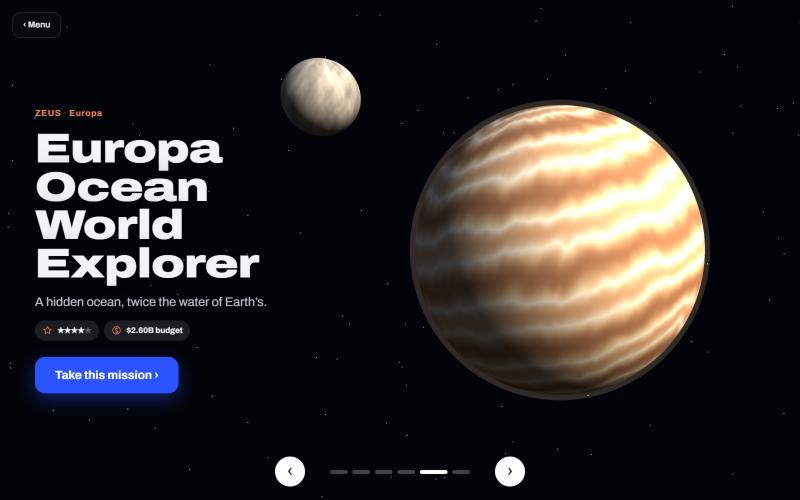
How it plays
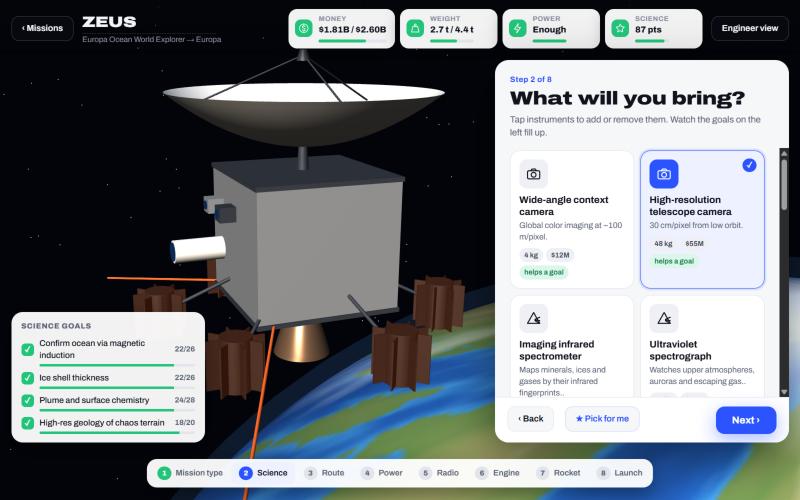
Build it in the hangar
1Pick a mission: Moon, Mars, Venus, an asteroid, Europa or Titan.
2Choose instruments that match the science goals.
3Pick a launch date, power, radio dish, engine and rocket.
4Watch money, weight, power and science update live.
A guide called Nova shows beginners what to press at every step.
Fly it yourself
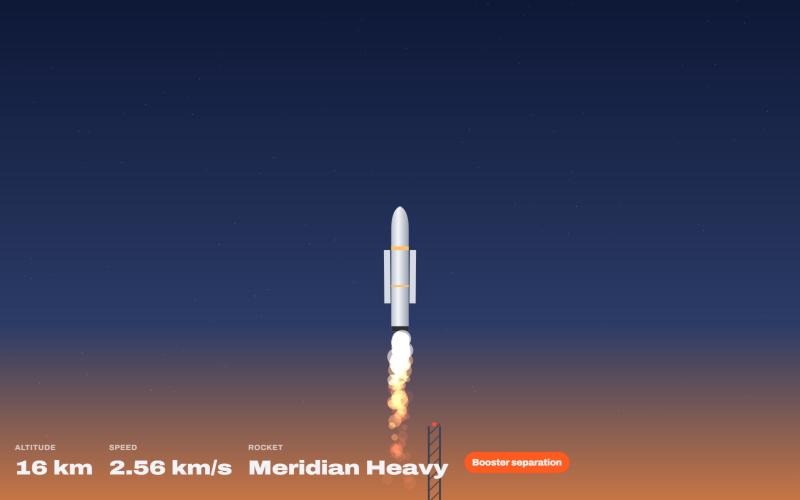
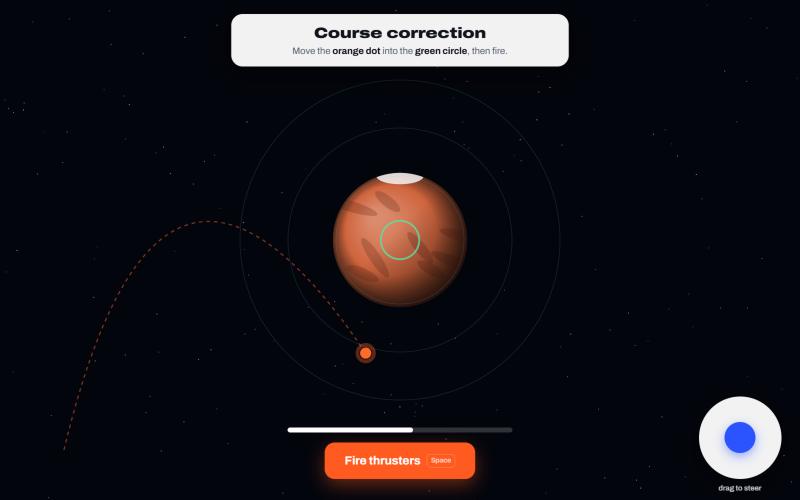
Four mini-games, one mission
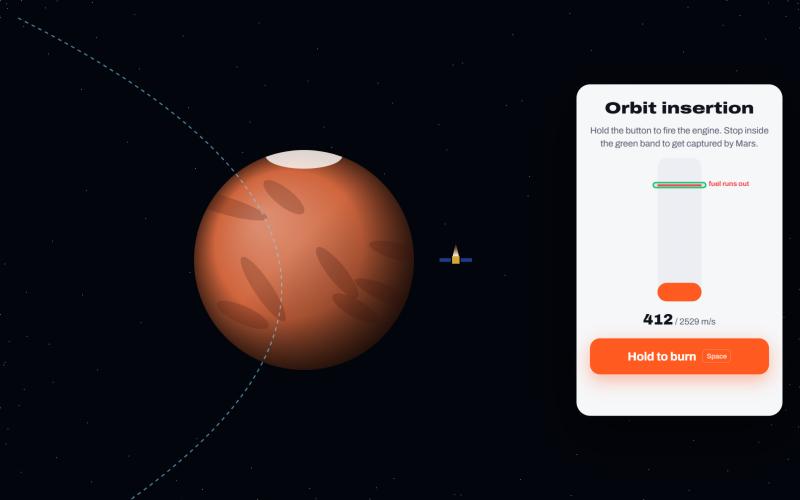
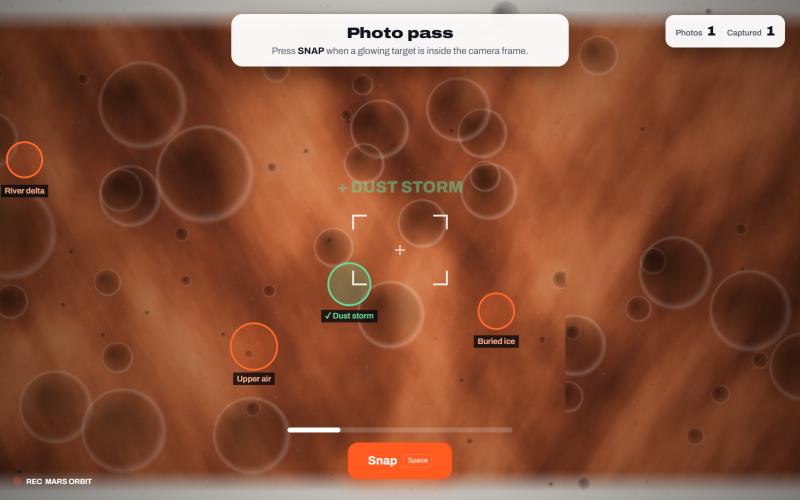
Built on NASA data
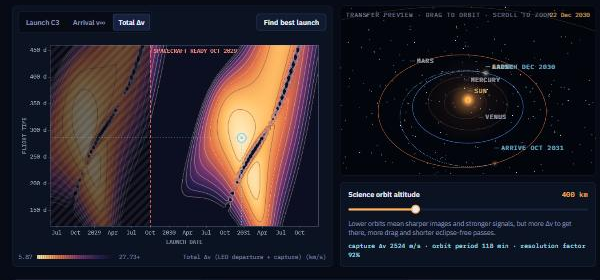
Real orbital mechanics
JPL ephemeridesPlanet positions from NASA JPL's Keplerian elements
Porkchop plots~10,000 Lambert solutions per chart
Rocket equationFuel sized burn by burn
1/d² lawsSolar power and radio data rate fall with distance
An "Engineer view" shows every budget behind the game.
Learn from the result
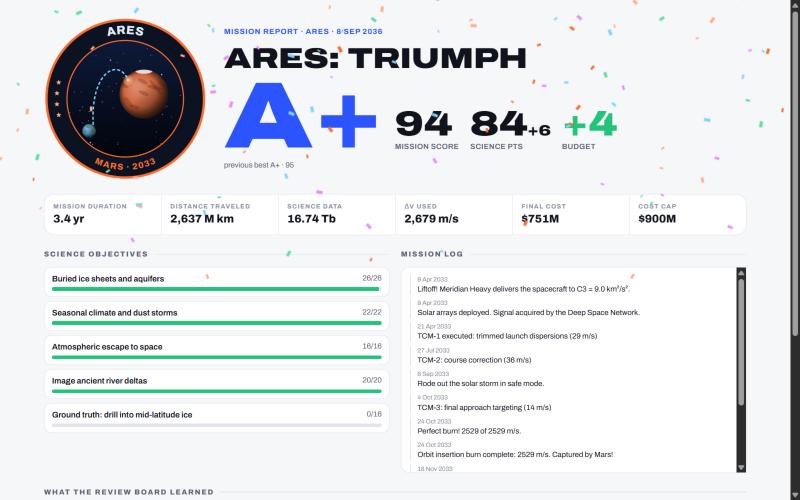
Every choice shows up
The build phase tests your margins with mass growth, cost overruns and delays. In flight, solar storms, computer faults and discoveries test your decisions.
The report grades your mission, makes a mission patch, and explains which of your choices caused each success or failure.